Before you commit budget to a substation, it pays to know your options. How many substation types are there, and which one fits your project? Each differs in footprint, cost and build time, so the choice shapes the whole project.
What a Substation Does
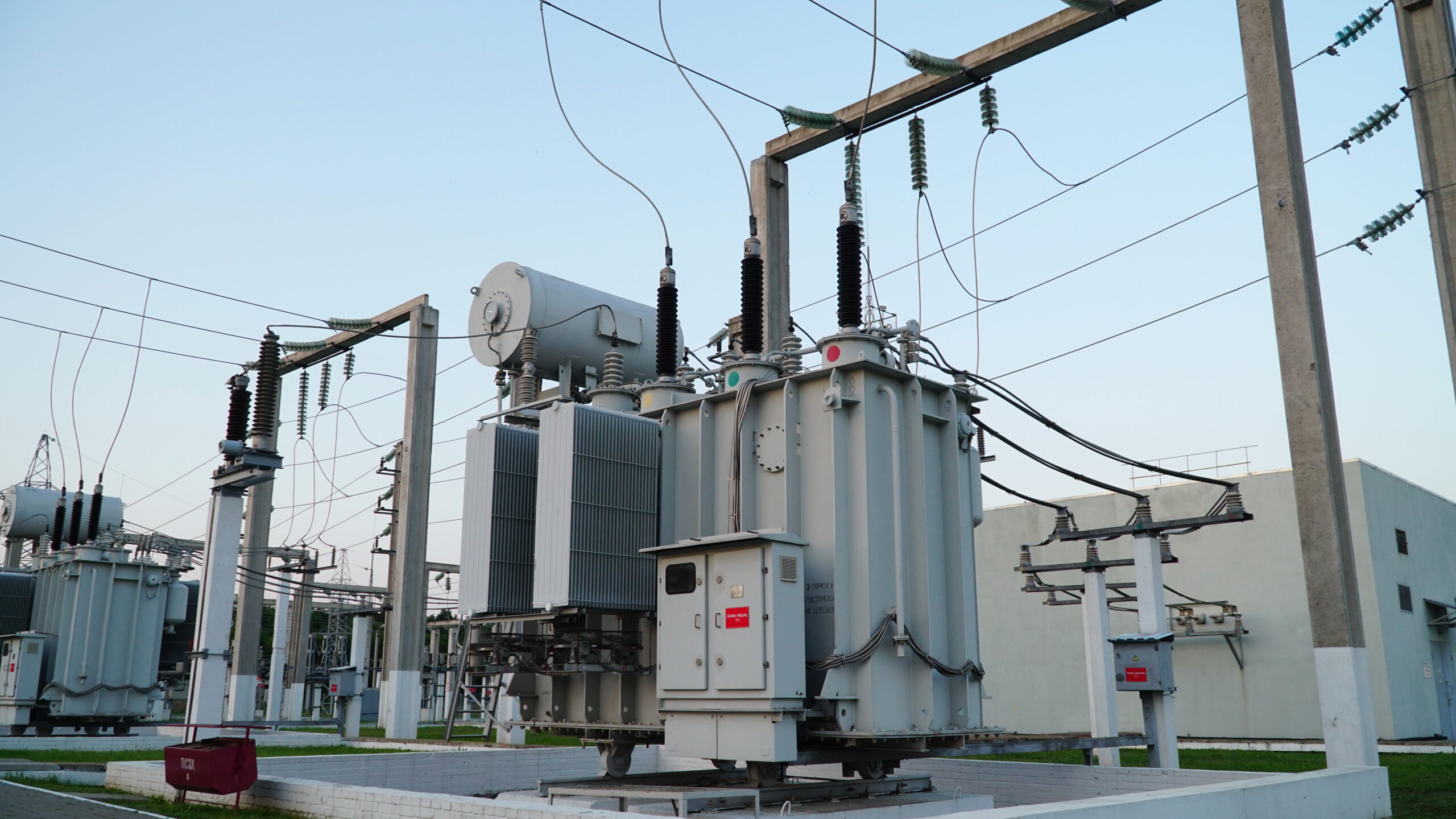
Power leaves the plant on high-voltage lines and has to be stepped to a usable level before it reaches the people who depend on it. The substation is where that happens, and where the flow of electricity is controlled. You will find them at power plants, along transmission routes, near towns and industrial estates, and inside factories or large buildings that take high-voltage supply directly.
Substation Types: Three Ways to Classify Them
Engineers sort substations by function, by installation type, and by who operates them.
Substation Type
3 Essential Ways to Classify Engineers categorize substations based on operational function, installation method, and ownership.
By function
- Step-up: Sits at the power plant and raises voltage so power can travel long distances.
- Step-down: Brings voltage down to a level the end user can work with.
- Switching: Links circuits and reroutes power without changing voltage.
- Distribution: Delivers power out to local service areas.
Substations near end users are typically step-down, because power has to be matched to the machinery it runs.
By installation type
This is the choice that most affects your project.
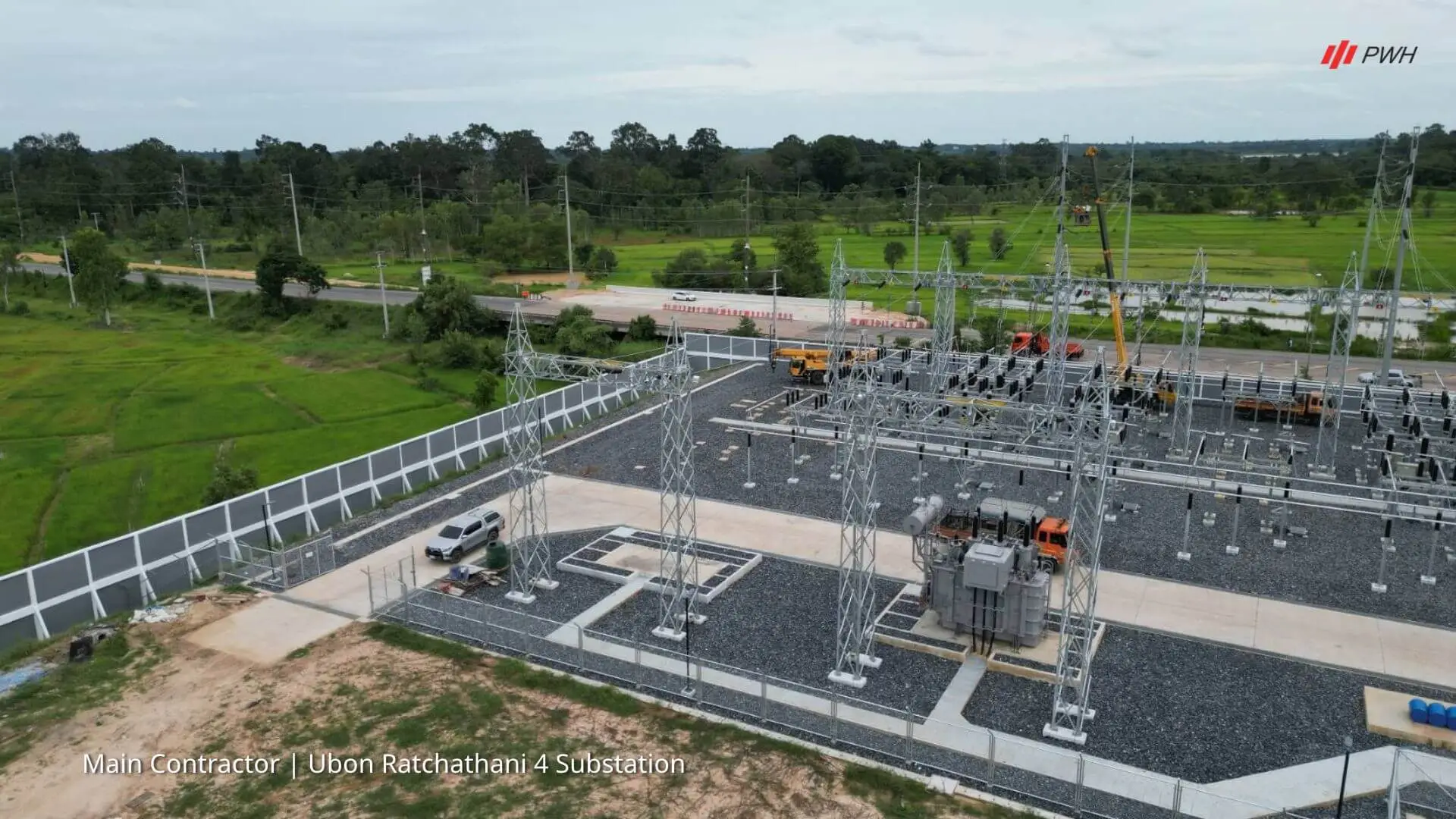
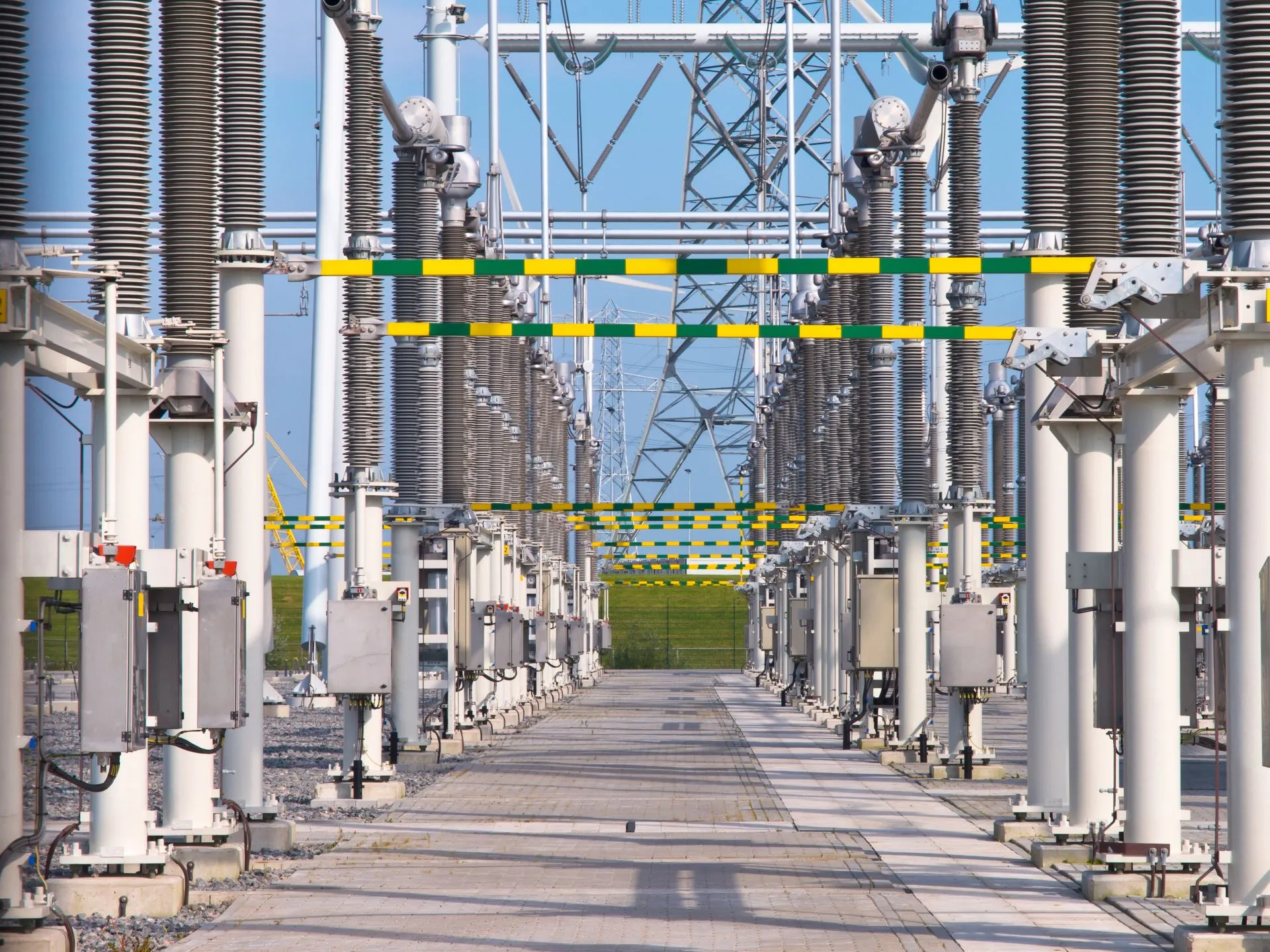
Outdoor (AIS: Air-Insulated Switchgear) keeps equipment in the open air.
- Strengths: Lower equipment cost, and easy to inspect and expand when land is available.
- Watch-outs: Needs a large site, and equipment is exposed to dust and humidity.
- Best fit: Projects with generous land, such as utility substations, power plants and large facilities.
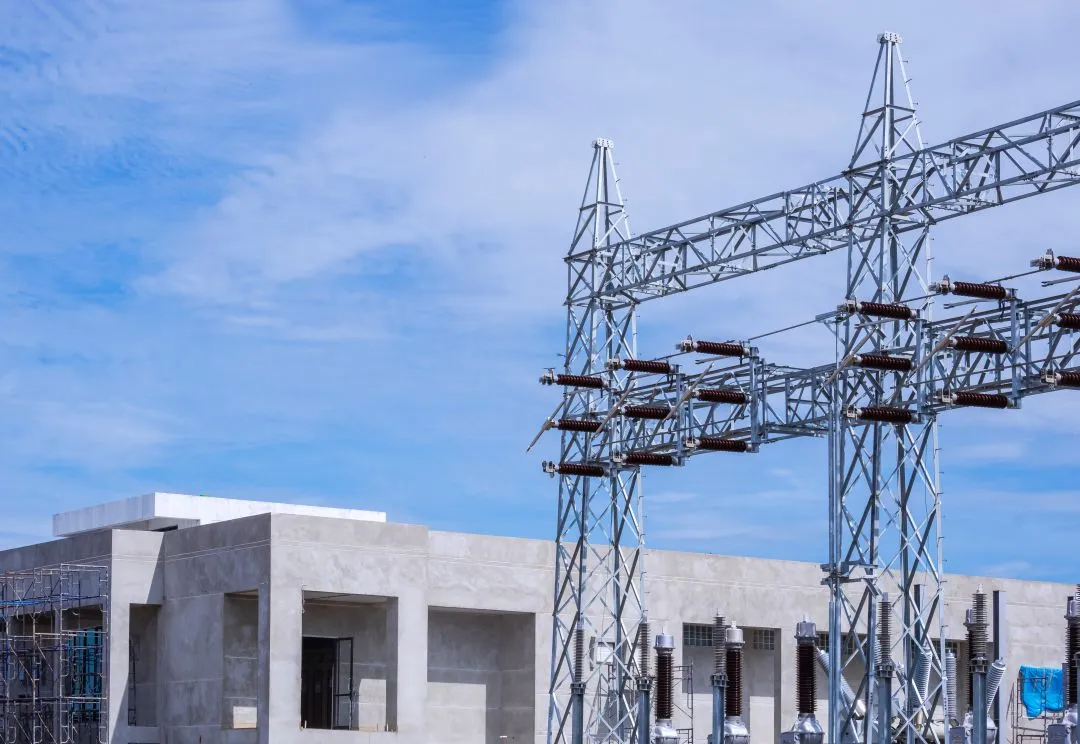
Indoor (GIS: Gas-Insulated Switchgear) seals equipment in enclosed units inside a building.
- Strengths: Needs far less space than AIS and handles harsh conditions well.
- Watch-outs: Higher equipment cost, and maintenance should be planned up front.
- Best fit: Tight sites or demanding environments.
Modular (e-house: Electrical House) is a prefabricated building or enclosure, built and tested at the manufacturer’s factory, then delivered to site.
- Strengths: Less work on site, factory testing before handover, and easy expansion by adding modules.
- Watch-outs: Transport, foundations and connection points need early planning.
- Best fit: Fixed deadlines, remote locations, or sites where building on location is hard.
By operator
- Utility substation: Part of the main grid, run by the utility.
- Customer substation: Built and run by a large power user, such as a factory or large building, and designed to meet the local utility’s grid connection requirements.
Space, budget, schedule and grid-connection rules are tied together. Choose a substation type without seeing all four and you often end up reworking the design mid-build, when changes cost the most. A contractor who can carry the project from first sketch to handover helps you decide based on what your site can actually support.
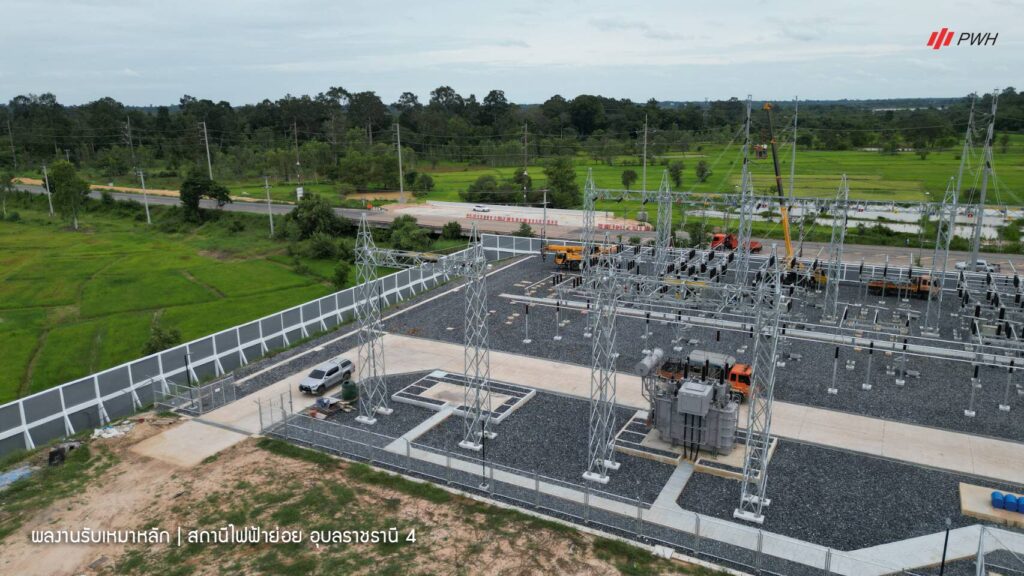
PWH Thailand delivers substations as end-to-end EPC (engineering, procurement and construction) projects: design, equipment supply, construction, commissioning and handover, all under one accountable partner. No juggling separate contractors. We bring more than 40 years of experience and a joint-venture foundation with Germany’s PHB-Weserhütte A.G., pairing international standards with a working knowledge of Thai regulations and grid connection requirements.
Consultation is free!
📞 Tel: 02-246-9988
📩 Email: info@pwhthailand.com
🌐 Website: https://pwhthailand.com/th
🔵 Facebook: PWH Thailand – ผู้เชี่ยวชาญงานก่อสร้าง และพลังงานครบวงจร
FAQ
How many substation types are there?
It depends on how you classify them:
- By function: step-up, step-down, switching and distribution
- By installation: AIS, GIS and e-house
- By operator: utility and customer
AIS vs. GIS: what’s the difference?
- AIS equipment sits outdoors, which keeps costs down but takes more land. GIS equipment is sealed in enclosed units indoors, so it needs much less space and holds up well in tough conditions, though the equipment costs more.
What is an e-house, and when does it make sense?
- An e-house is a prefabricated building or enclosure, built and tested at the manufacturer’s factory before it ships to site. It makes sense when the schedule is tight, the site is remote, or you expect to expand later.
What does PWH Thailand do?
- We deliver End-to-End EPC solutions (engineering, procurement and construction). That covers every stage, from concept engineering and equipment supply to construction, testing, commissioning and final handover, with one accountable partner throughout.